
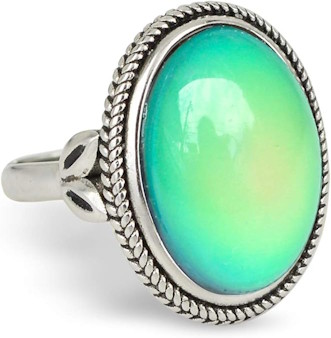

Opens Amazon in a new tab
Mood Rings on Amazon
Tap image to view on Amazon
Mood rings — the color-changing jewelry that claims to reveal your emotions — became a cultural sensation in the 1970s and have since enjoyed multiple revivals. With their shifting hues and mystique, they’ve been equal parts fashion statement, party trick, and pop-culture icon.
History
Mood rings were invented in 1975 by New York inventors Marvin Wernick and Joshua Reynolds. Their creation combined novelty appeal with the pseudoscience of “reading” emotions via thermochromic liquid crystals. The rings debuted at the height of the self-help and New Age movements, making them an instant hit.
How It Works
Inside each mood ring is a stone or dome filled with liquid crystals. These crystals react to subtle changes in body temperature by twisting, which alters the wavelengths of light they reflect — producing different colors. The idea is that temperature changes correlate with emotional states, though the effect is more science of materials than mind-reading.
Cultural Impact & Legacy
The 1970s boom made mood rings a staple of gift shops and teen fashion. Revivals in the 1990s and 2000s introduced them to new generations, often as inexpensive accessories, souvenirs, or nostalgia pieces. They’ve appeared in movies, TV shows, and even tech-infused modern versions that pair with apps.
Variants & Modern Versions
Classic mood rings have been joined by necklaces, bracelets, and even nail polish using the same thermochromic principles. Some designs use higher-quality metals and stones, while others lean into playful shapes and bright colors for younger buyers.
Quick Facts
- Invented: 1975
- Inventors: Marvin Wernick & Joshua Reynolds
- Core Technology: Thermochromic liquid crystals
- Peak Popularity: Late 1970s, with revivals in the 1990s and 2000s
- Common Materials: Brass or silver bands, glass or plastic “stone” dome
- Price Range: Inexpensive novelty to mid-tier jewelry
🧾 Availability & Price (as of August 2025)
Mood rings remain widely available as both budget novelties and higher-end jewelry. Prices depend on metal type, craftsmanship, and presentation.
Pricing (typical ranges)
- Basic novelty rings: $3–$10 USD
- Mid-tier designs (silver, stainless): $10–$25 USD
- Premium jewelry versions: $30–$100+ USD
Popular places to buy
Note: Prices reflect typical listings and vary by material quality, craftsmanship, and design.
Collector’s Corner
For vintage collectors, original 1970s mood rings in good condition — especially with intact packaging and working crystals — are the most desirable. Look for clear, responsive color shifts and minimal surface wear. Certain brands or unusual color palettes are also sought after.
Notable Records & Achievements
Mood rings became a multimillion-dollar fad within months of their launch, inspiring an entire category of color-changing novelties. They remain one of the most recognizable examples of 1970s pop-culture fashion.
Fun Facts
- Not Actual Mood Detectors: While fun, mood rings are temperature-based, not emotion-based.
- Color Charts: Many came with charts matching colors to emotions, from “Romantic” (purple) to “Anxious” (amber).
- Pop Culture: They’ve appeared in everything from sitcoms to teen dramas as shorthand for “reading” a character’s feelings.
Watch: How Mood Rings Work
Video courtesy of @CPJCollectibles on YouTube.