
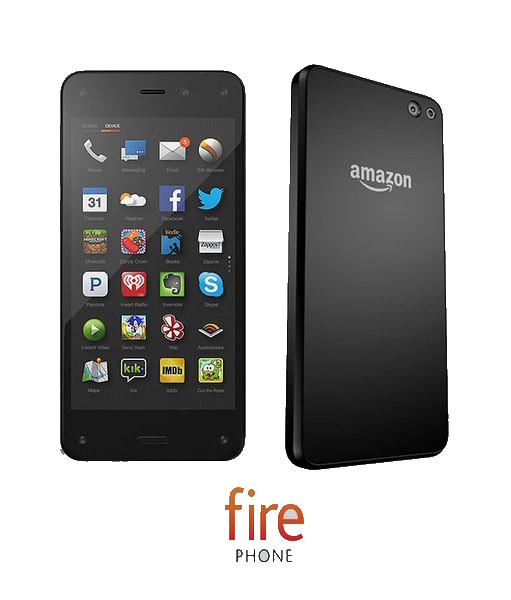

Amazon Fire Phone — the big bet that fizzled.
Amazon Fire Phone (2014) — a bold, 3D-ish smartphone with head-tracking tricks and instant product scanning that looked futuristic on paper… but never won buyers in the real world.
History
Announced in June 2014 and launched in July as a U.S. AT&T exclusive, the Fire Phone was Amazon’s first smartphone. It shipped with Fire OS (Amazon’s Android fork), one year of Prime for early buyers, and a flagship-level price tag. Sales lagged almost immediately; within weeks the contract price plunged from $199 to $0.99, and Amazon later took a large write-down before discontinuing the phone in 2015.
What Makes It Special
Two headliners: Dynamic Perspective (four front sensors tracking your head to create a depth effect for maps, games, and UI) and Firefly (camera-based ID for barcodes, products, songs, TV, and more, often linking straight to Amazon). It also had Mayday live support and a 13MP camera with OIS. Cool ideas—just not enough to switch ecosystems.
Cultural Impact & Legacy
The Fire Phone became a classic case study: even a tech giant with an enormous store and services can miss if the pitch isn’t compelling. Its flop reinforced how crucial apps, pricing, carrier choice, and timing are in phones. Amazon regrouped and focused hardware efforts where it excelled—Fire tablets, Kindle, and Echo.
Variants & Modern Versions
No true successors. The Fire Phone line ended in 2015. Fire OS lives on in Amazon’s tablets and TV devices, but the smartphone experiment stopped at one generation (32GB/64GB, black).
Quick Facts
- Debut: 2014 (U.S. launch July)
- Main Manufacturer(s): Amazon (hardware produced with Foxconn)
- Materials: Glass panels with plastic frame; LCD display
- Sizes: 4.7″ 720p display; ~2,400 mAh battery
- Notable features: Dynamic Perspective (head-tracking), Firefly product ID, Mayday live support, 13MP camera with OIS
🧾 Availability & Price (as of August 2025)
You’ll mostly find used units online. Many are AT&T-branded or unlocked; network support is limited today, so treat it as a collectible, camera toy, or Wi-Fi demo piece. Condition varies widely—screen wear and battery age are common.
Pricing (typical ranges)
- Common/loose (working): ~$50–$120
- Better condition / boxed / 64GB: ~$120–$200+
- Rare/collectible (sealed or pristine bundle): ~$200–$350+ (sporadic)
Popular places to buy
Note: Check carrier lock status and assume limited calling support on modern networks; verify for Wi-Fi use and collectibles value rather than daily driving.
Collector’s Corner
Look for working buttons and intact front sensors (Dynamic Perspective needs all four). Confirm charger port health and screen integrity. Prefer unlocked units; AT&T models may be limited. Battery age is the #1 wear item—assume diminished life. For display pieces, keep the box, inserts, and original earbuds; store powered off and away from heat.
Notable Records & Achievements
One of the most cited smartphone misfires of the 2010s. Despite clever tech, the high price, AT&T exclusivity, and limited app ecosystem kept adoption low—and led to a large write-down shortly after launch.
Fun Facts
- Head-tracking, not true 3D: Four front sensors plus IR lights tracked your face to “move” the UI.
- Instant ID: Firefly could recognize products, songs, and TV scenes—often linking to purchase on Amazon.
- Prime perk: Early buyers got a free year of Amazon Prime bundled with the phone.
Watch: Amazon Fire Phone Review
Video courtesy of @verge on YouTube.