
Opens Amazon in a new tab
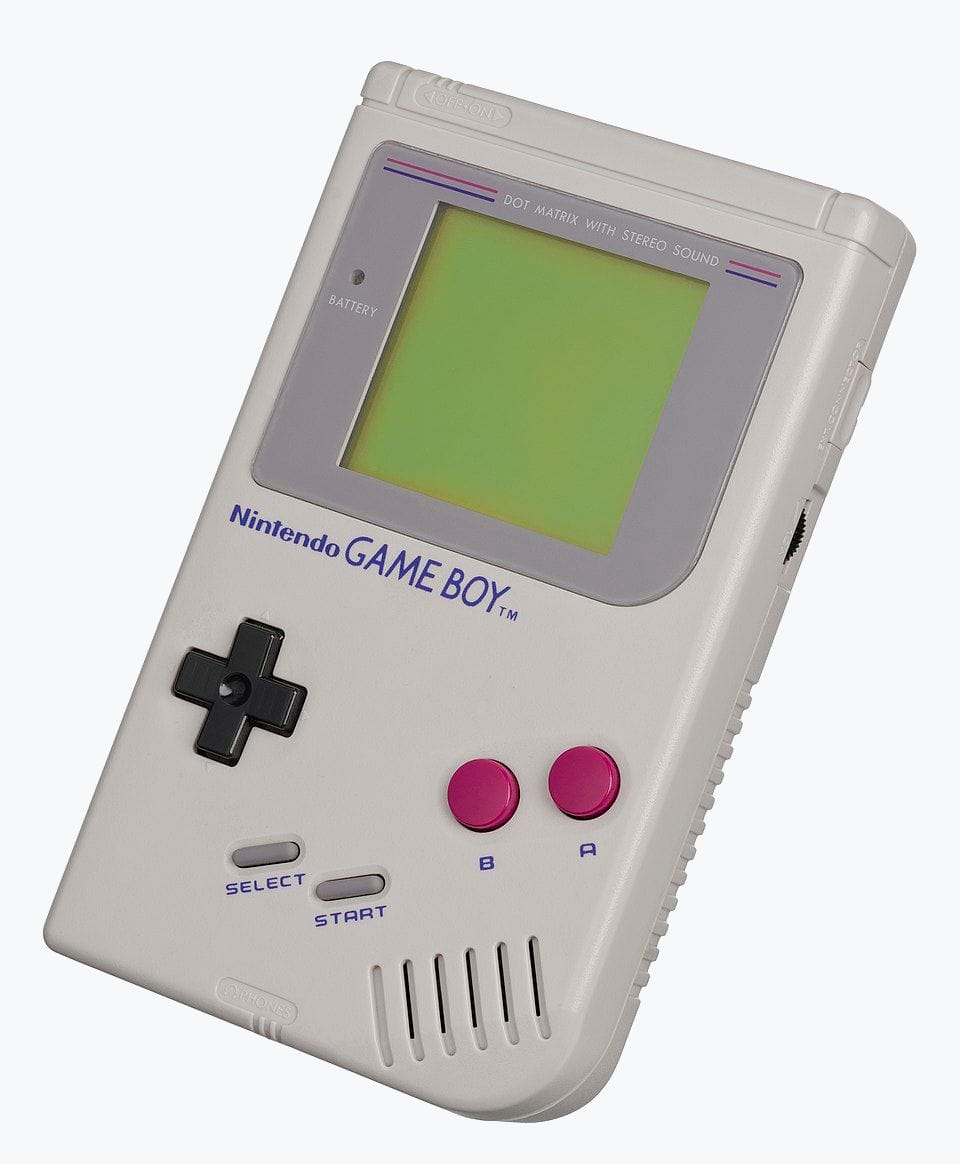
Nintendo Game Boy — renewed & used on Amazon
Tap image to view on Amazon
The Nintendo Game Boy (1989) transformed portable gaming from a niche novelty into a global pastime. Affordable, sturdy, and powered by a legendary game library (Tetris, Pokémon Red/Blue, Link’s Awakening), it became one of the most recognizable devices of the 1990s.
History & Origin
Conceived under Nintendo R&D1 and led by Gunpei Yokoi, the Game Boy followed Yokoi’s philosophy of “lateral thinking with withered technology” — using mature, reliable components to keep costs (and battery drain) low. While rivals like Sega’s Game Gear offered color, Game Boy’s simplicity and price helped it dominate worldwide.
How It Works
The Game Boy is a cartridge-based, 8-bit handheld with a 160×144 dot-matrix LCD capable of four green-gray shades. A custom Sharp CPU, 4-channel programmable sound, and the signature Link Cable for multiplayer made it flexible despite modest specs. Four AA batteries typically delivered 10–15 hours of play.
Cultural Impact & Legacy
Game Boy popularized gaming “anywhere” — schoolyards, subways, road trips — and became a fashion object with the 1995 Play It Loud! color shells. It launched the handheld Pokémon phenomenon, inspired endless accessories (camera, printer, lights), and paved the way for Game Boy Advance, Nintendo DS, and ultimately the Switch.
Variants & Successors
Game Boy Pocket (1996, slimmer with improved screen), Game Boy Light (1998, Japan-only backlight), Game Boy Color (1998, backward-compatible color), then the Game Boy Advance line (2001) and the dual-screen Nintendo DS family (2004) as the spiritual successors.
Quick Facts
- Released: April 21, 1989 (Japan); July 31, 1989 (North America)
- Developer: Nintendo (R&D1)
- Engineer: Gunpei Yokoi
- Display: 2.6″ monochrome (160×144), 4 shades
- Power: 4×AA batteries (≈10–15 hours)
- Units Sold: ~118 million (Game Boy + Game Boy Color)
- Sales by Region:
- Japan: ~32 million
- North America: ~44 million
- Europe/Other: ~42 million
- Notable Games: Tetris, Pokémon Red/Blue, Kirby’s Dream Land, Link’s Awakening
🧾 Availability & Price (as of August 2025)
The original Game Boy (DMG-01) is long out of production but widely traded on the secondhand and collector market. Stock varies by region and condition; modded units (IPS screens, USB-C power, new shells) command premiums.
Pricing (typical ranges)
- Loose console (working): $40–$150 USD (condition-dependent)
- Complete-in-Box (CIB): $150–$350+ USD (variant/condition matters)
- Mint/Sealed: $500+ USD on collector marketplaces
- Modded/Restored: $150–$300+ USD (screen/battery/shell upgrades)
Popular places to buy
Note: Prices reflect typical listings as of August 2025. Availability and pricing vary by region, condition, and seller.
Collector’s Corner
Check for screen lines or dead pixels, speaker hum, corroded battery contacts, stiff/domed buttons, and shell yellowing. Original accessories (box, manuals, styrofoam, link cable, headphones) add value. Look for authentic model numbers (DMG-01), legit serial labels, and consistent screw types; beware repro shells/labels when paying premium prices.
Notable Records & Achievements
Among the best-selling video-game systems ever; the Game Boy line crossed 100M units in the 1990s. A famously battle-scarred unit survived a Gulf War bombing yet still plays Tetris, and is displayed in New York — a testament to the hardware’s durability.
Fun Facts
- No Backlight, No Problem: Many players used clip-on lights or street lamps during night drives.
- Play It Loud! (1995): Bold color shells (yellow, red, black, green, etc.) turned the console into a fashion piece.
- Celebrity Owners: The Game Boy’s simplicity helped it cross into academia and pop culture alike.
Watch: The Making of the Game Boy
Video courtesy of WrestlingWithGaming on YouTube.